Gyokuro
Gyokuro, the jade dew of Japan
Gyokuro (玉露, "jade dew") is the most prized grade of Japanese green tea. Shade-grown and hand-finished, it trades the grassy bite of everyday green tea for something sweet, smooth and deeply savoury.
The jade dew
Japan's finest green tea
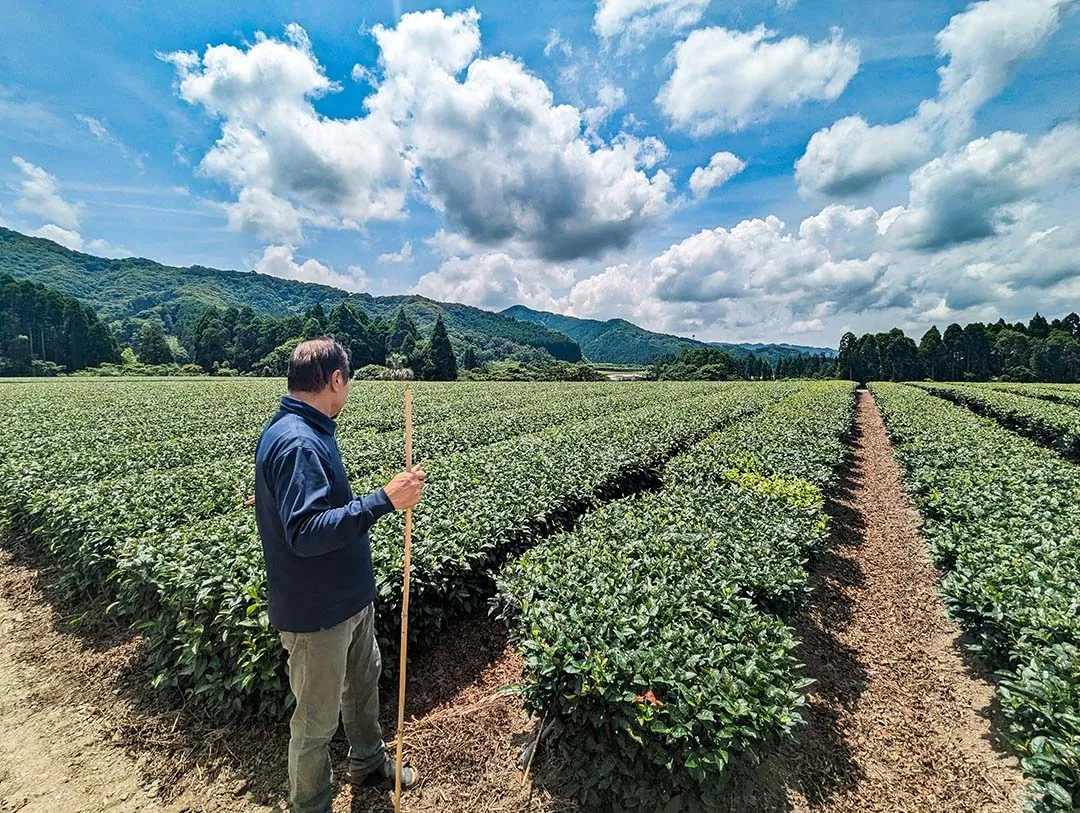
All of our gyokuro comes from Sakamotoen, a family farm in Kagoshima whose rich volcanic soil and clean air have grown tea for almost a century. Every leaf is certified organic.
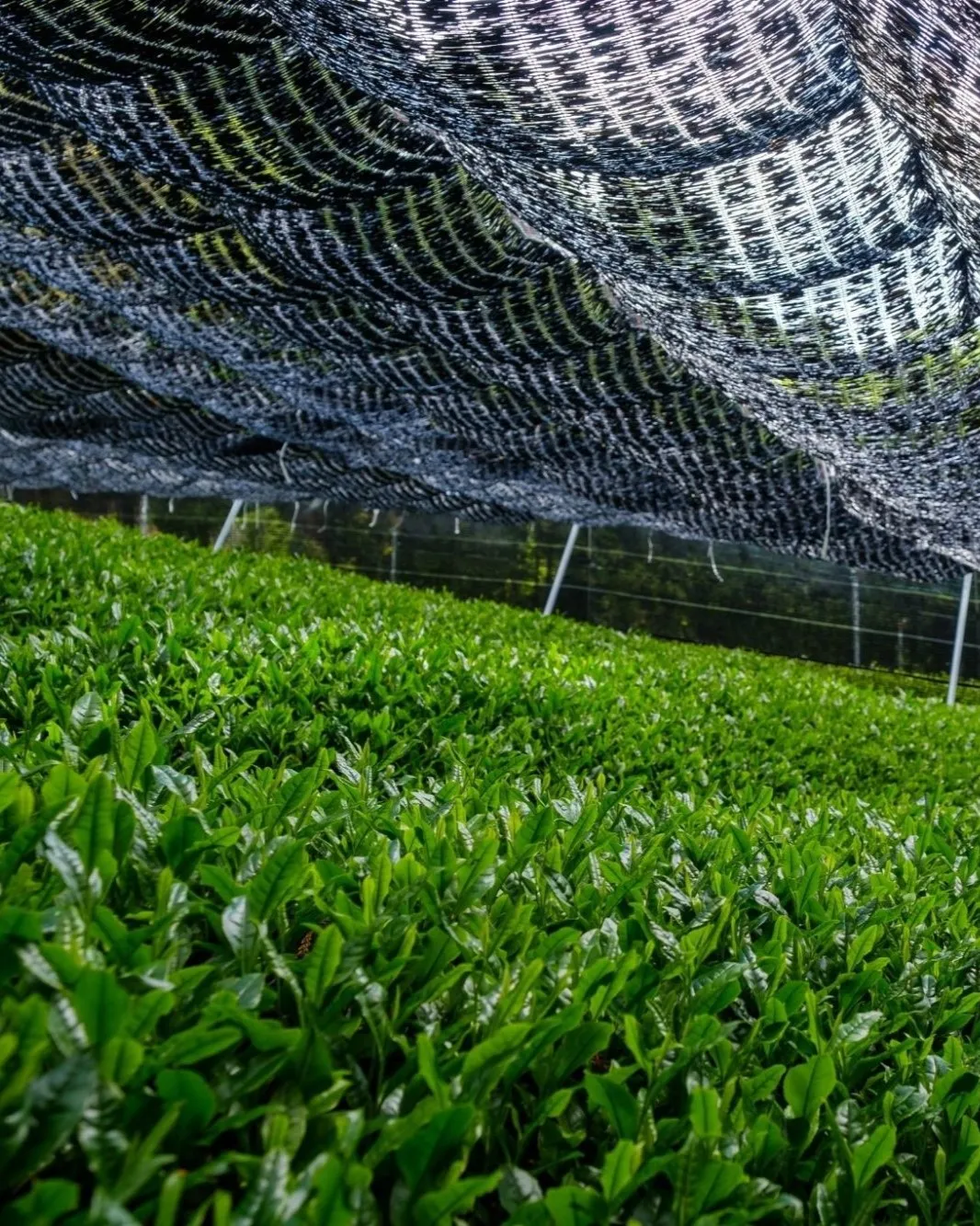
What sets gyokuro apart is the shade. In the weeks before harvest the bushes are covered, and the leaves respond by concentrating the compounds that give gyokuro its signature: a natural sweetness and a savoury depth known as umami.
The method
Grown in the shade
About three weeks before picking, the plants are covered, a technique called kabuse. Starved of full sun, the leaves slow their photosynthesis and change chemistry.
They pack in more chlorophyll (that vivid jade colour) and far more L-theanine, the amino acid behind gyokuro's smooth, mellow, low-bitterness taste. Caffeine climbs too, for a gentle lift. It's a slower, more careful way to grow tea, and you taste the difference.
The cultivars
Four leaves, four characters
Gyokuro isn't one thing. Each cultivar Sakamotoen grows brings its own balance of sweetness, umami and body, which is how our four grades came to be.
Sasahime
Japan's classic cultivar, making up about three-quarters of all Japanese tea. Balanced, richly umami.
OkumidoriWakamusya
Deep umami with little astringency, and a full, rounded body.
HarutoWakamusya
A newer cultivar: sweet and strongly umami, grown in small quantities.
SaemidoriChameijin
An early-sprouting hybrid: mild, naturally sweet, with very little bitterness.
Good for you
Sweetness with substance
Because it's shade-grown, gyokuro is especially rich in catechins like EGCG (one of the most studied antioxidants in the plant world), plus the calming amino acid theanine. Read more on the health benefits of green tea.
Four grades, one farm
Taste the range.
From the everyday Chamusume to the farm's prized Chameijin, all shade-grown at Sakamotoen.
Shop gyokuro